12 July 2009

SFAA Astronomy Lectures: Spitzer Telescope, Kuiper Belt

Every month the San Francisco Amateur Astronomers (SFAA) host a lecture by an expert in the field of astronomy. In June, the guest was Dr. Dana Backmann of the SOFIA Project and SETI Institute. Dr. Backmann spoke about the Spitzer Space Telescope and the detailed research underway to understand and photograph Exoplanets. These are planets orbiting stars outside of our own Sun, such as Epsilon Eridani, Fomalhaut and Vega. Of the 350 stars being studied by the Spitzer Space Telescope, 20% of them have "Kuiper Belts" where Neptune-like planets can be found.

This month the San Francisco Amateur Astronomers meeting and lecture takes place on Wednesday July 15th at 7:30 pm. The lecture features Dr. Eugene Chiang, Associate Professor of Astronomy and Earth & Planetary Science at UC Berkeley, in a talk entitled "The Tenth Planet & Beyond." Dr. Chiang will focus exclusively on the Kuiper Belt, the part of the Solar System beyond the orbit of Neptune that includes over 1000 icy, rocky objects, including one bigger than Pluto.

The SFAA lectures always take place at the Randall Museum in San Francisco and are open to all ages (although many of the topics are oriented toward an adult audience). Bring a friend and take advantage of the chance to get a truly in-depth perspective on a range of topics in the field of astronomy.

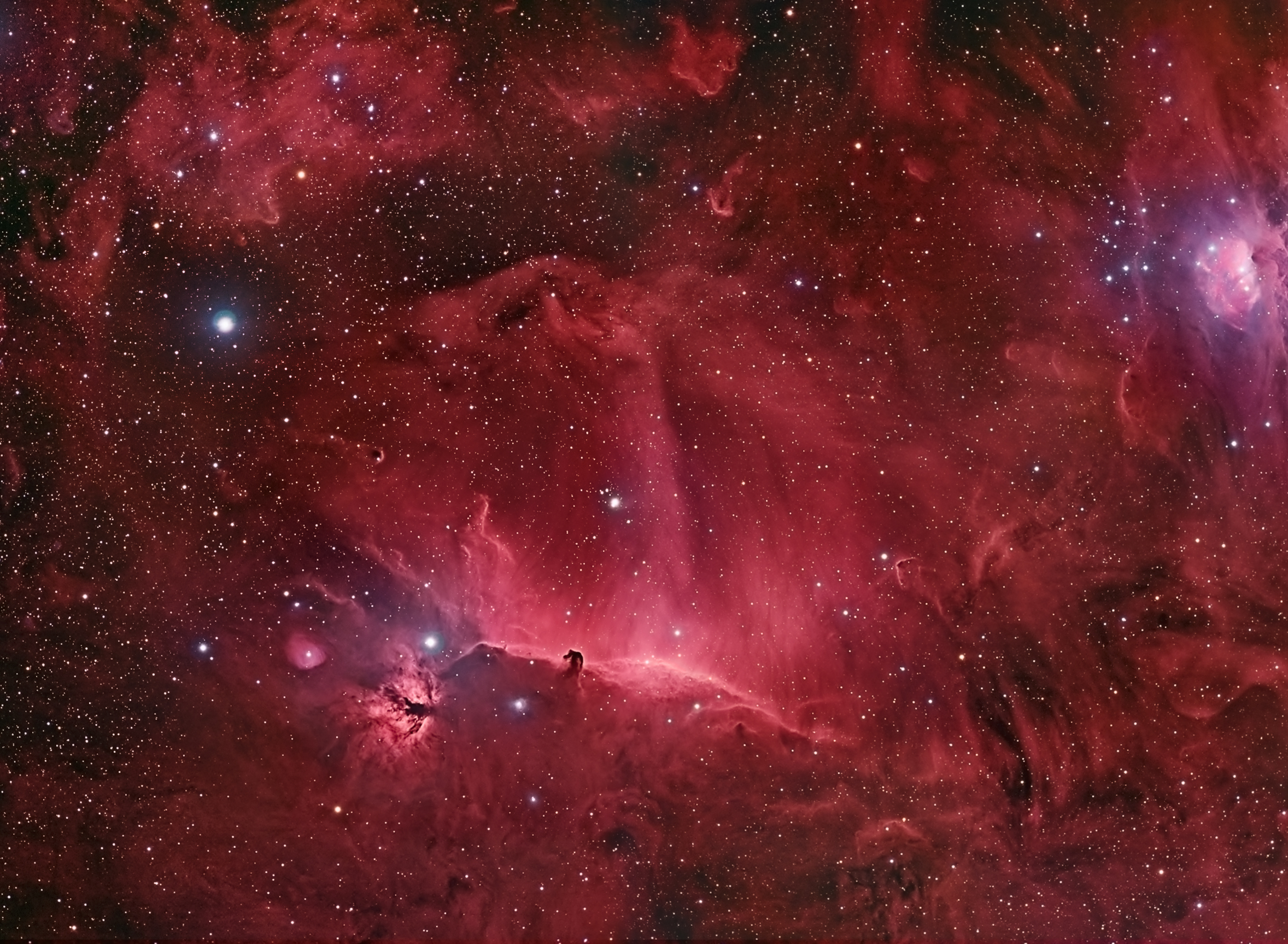
One additional note: a traveling display of astronomical photographs from space missions are on tour and currently at the California Academy of Sciences in Golden Gate Park in San Francisco. The display, called "From Earth to the Universe (FETTU)" will remain at the CAS until September and then move to the Tech Museum in San Jose. The FETTU exhibit showcases the varying spectra of light and how scientists learn by studying the universe at wavelengths of light other than the visible spectrum, something that can help the public to better understand the SOFIA Project.

08 July 2009

iPhone apps: Star Walk, Moon Map Lite

I love my iPhone. There are many reasons for this, not the least of which are the nifty astronomy apps that are available for the iPhone. These apps bring a universe of information (pun intended) to my fingertips anytime and anyplace.

I've been using these apps while enjoying the rare clear evenings here in San Francisco this summer and will start posting short write-ups of these apps. Although these are not definitive, elaborate product reviews, I wanted to offer some cursory thoughts on a selection of astronomy apps for the iPhone. Here are two, Star Walk and Moon Map (Lite).

Star Walk: ($4.99) I am delighted with this application and have put it to work under different circumstances and in different settings, high on Mt. Tam, in the coastal redwoods where the skies were dark, and in my own backyard in San Francisco under the glow of city lights. Dan Schroeder has an excellent website with a complete review of Star Walk including screenshots.

My personal experience is that the application provides the detail needed while enjoying an evening under the stars. I used it extensively to accurately locate all the stars of constellations when I simply want to know the exact configuration of Bootes or Virgo or Centaurus (as noted in my Mt. Tam blog post). I also used Star Walk with binoculars to find Messier objects in Canis Venatici and Ursa Major this evening and the level of detail was just sufficient to help me to correctly identify these objects.

As with any iPhone application, there is tremendous flexibility to zoom in and out, something that makes map reading feasible on such a small screen. Having all of this detail in my pocket, ready to go at any time, is a very powerful tool for the casual observer as well as the seasoned amateur. My test of technology, hobby toys and computer applications is whether I actually get them out and use them when I should. With Star Walk, I find I am using it more and more often to give me deeper insights into the night sky.

Moon Map Lite: This is a free application (there are standard and "pro" versions that cost a few dollars) and it does just what it claims, providing a nice detailed map of the moon that you can scroll and zoom. The creator of Moon Map has a nice webpage showing all three versions of the application with short demo videos.

Earlier this week the full moon dominated the sky and I spent some time trying to use Moon Map Lite to help me identify some of the major features of the moon. I've not tried to identify more than just a few features of the moon in the past, so I figured this would be a chance to see if I could learn some new craters and seas.

To my dismay, I found this to be considerably more challenging than expected, primarily because the full moon is illuminated in a way that "drowns out" some of the key features of craters and makes them look quite a bit different than the excellent maps in Moon Map. However, I don't blame the Moon Map application for this, but rather my limited attempt to use it during only one phase of the moon. I will try using Moon Map to learn more of the moon's features when the moon is at different points in its orbit, looking for additional details through the telescope that might be easier to see when the sunlight strikes the moon from different angles. And who knows, I might just spring for $2.99 to get Moon Map Pro :-)

Coming soon: I'll review more iPhone apps including Distant Suns, Iridium Flares, ISS Visibility and iSolarScape. If you want to read an excellent group of reviews of star-map applications and see a very helpful comparison chart, look at Dan Schroeder's webpage comparing seven different iPhone apps.

04 July 2009

International Space Station Marathon

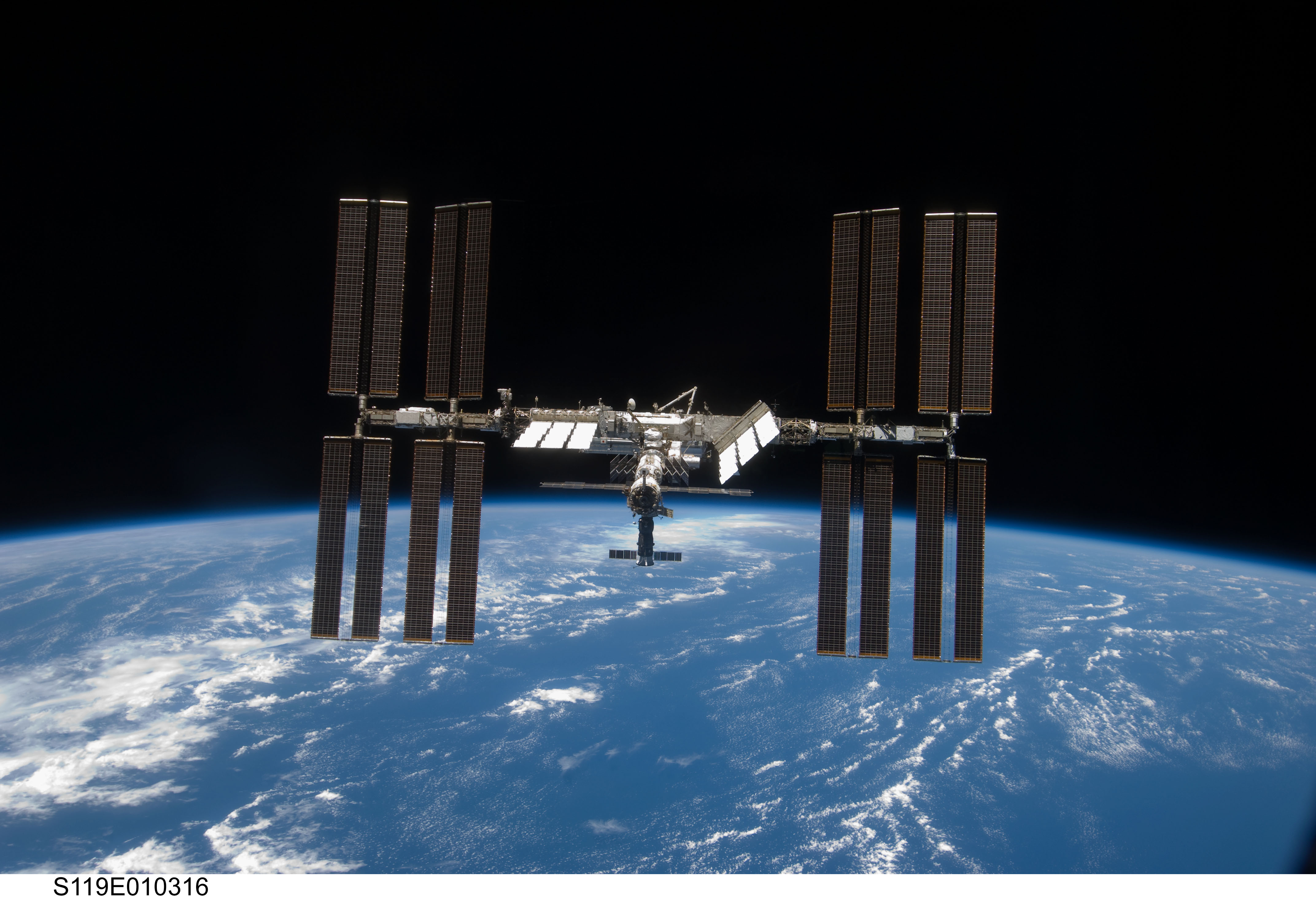
When I host a star party or head outdoors in the evening, I like to check the status of satellites such as the Iridium communications satellites or the International Space Station (ISS). When they are visible, I like to point them out to friends. I marvel at these satellites in particular because they are (a) bright enough to see even with bright city lights, and (b) are well tracked and therefore predictable.

For the next few weeks the International Space Station will be particularly well positioned in its orbits around the Earth to be seen much more often than usual - even multiple times a day each week - throughout the month of July! I am looking forward to the graceful swing of the ISS across the sky, speeding at over 17,000 miles per hour overhead. NASA is calling this especially interesting period of time the Space Station Marathon and I think it will be great. Next week the Space Shuttle Endeavour will launch and link to the ISS to make the flyby even more interesting.

Here is the timetable for ISS visibility over San Francisco. If you don't live here, you can use the link on the right hand side of this blog to get to the general purpose ISS locator ("Space Station/Satellite Sighting").

30 June 2009

Scorpius now in view

The summer constellation Scorpius is now center-stage in the southern sky. It's always a treat to see the distinctive shape of Scorpius with red supergiant star Antares glowing in the sky. Through binoculars Scorpius is great because of an abundance of deep-sky objects in and near the constellation. And this week there is an extra treat as the moon passes through.

21 June 2009

Star Party on Saturday 27 June

This Saturday is a chance to hear a great lecture and enjoy star gazing with the San Francisco Amateur Astronomers (SFAA) for their monthly star party on Mt. Tam. This month, Professor Lynn R. Cominsky of Sonoma State University is giving a lecture at 8:30 pm at the Mountain Theater. Her topic will include "blazing galaxies, intense stellar explosion and super-massive block holes" and should be quite captivating. Afterwards, the SFAA will set up telescopes for public viewing of the universe and there is a lot to see this time of year. The Moon will be a lovely crescent, Saturn is visible, and many deep space objects such as star clusters and nebulae will be on display. And if all goes well, I'll be there pointing out constellations with my trusty green laser pointer.

Hope to see you Saturday night - above the fog.

10 June 2009

Eerie Moon

We all know what the Moon looks like when it is in its early phases, waxing from a thin crescent over a two-week interval of time through first quarter and then to full moon. Although many people might not be able to explain exactly which way the "horns" of a crescent moon are pointed, it's something that you just know is right when you see it. For us living in the Northern Hemisphere, the horns of the young crescent moon point left and up when you see the moon in the western sky after sunset. That is, they point primarily south (left) and up (east) because the moon is being illuminated by the setting sun -- which is typically to the lower right (northwest) of the crescent moon. If you suddenly saw the horns of the crescent moon pointing the other direction, you might find it strangely discomforting. I certainly would!

Each month as the moon wanes from full moon to last quarter to a thin crescent in the morning, the orientation of the crescent reverses compared to the first 14 days of the lunar cycle. But because these phases are visible late in the night and in the early morning, there are generally fewer opportunities to see the moon in these phases. When I am up late at night or very early before sunrise and I see an old moon in the sky, the reversal of the orientation of the horns always throws me off. This week and weekend if you are up late at night or early in the morning you can take note of this as the waning moon passes Jupiter (see image) and continues eastward in its path, slimming to a thin crescent by June 18-20. Sky and Telescope Magazine called the waning gibbous late at night an "eerie moon" and I can appreciate why they would call it that. Whenever you see the moon, be it a slender evening crescent just starting its 29-day cycle, or a bold full moon lighting up the night, or a waning gibbous, think about the view and how it makes you feel. If you can start to gain a familiarity with the phases of the moon, you will find it does indeed evoke different feelings depending upon which phase it is in.

04 June 2009

Above The Fog: Star Parties on Mt. Tam

It's been foggy in San Francisco. Really foggy. It seems like we have one clear night and six foggy nights per week lately and that is not what an Urban Astronomer likes. So it was with delight that I drove myself and my daughter to Mt. Tamalpais last Saturday for the monthly lecture and star party put on by the San Francisco Amateur Astronomers (SFAA). The Mt. Tam lecture series has been going on for many years and features a wide range of speakers from different areas of astronomy and cosmology.

Following each month's lecture, the SFAA hosts a star party featuring a collection of telescopes, some homemade by SFAA members, pointing out the wonders of the night sky. Despite the foggy conditions in San Francisco and Marin, Mt. Tam is almost always a great vantage point because you are literally "above the fog" and despite the proximity to the city lights of the Bay Area, the viewing conditions on Mt. Tam are quite good. Last Saturday was no exception and the view of the first quarter Moon, Saturn and the spring and summer constellations was great. My daughter and I used an iPhone application called "Star Walk" to help us to identify the fainter stars in Libra and Virgo, to get a full picture of the big summer constellation Ophiuchus, and to even identify part of Centaurus. Using the "Star Walk" application we were able to see that the view from Mt. Tam toward the south was good enough for us to see the upper half of Centaurus and even though we could not see our nearest stellar neighbor, the Alpha Centauri system, we felt like we were nearly there. In fact, it was very interesting to see on my iPhone that the Southern Cross was only a few degrees below the horizon at that moment and even though we can never see it from 37 and 38 degrees north latitude (the Bay Area), I felt like I was *almost* there. I guess I need a vacation at a more southerly latitude ...

27 May 2009

Blue Neptune

A first for me: Early this morning before sunrise was the first of three conjunctions between Neptune and Jupiter. The rare "triple conjunction" started this morning with a close passage of Jupiter near Neptune in Capricorn. The separation was less than half a degree (less than a moon-width) and the difference visually between giant Jupiter and its four moons and blue Neptune was dramatic. Neptune looks essentially like a dim blue star through binoculars -- and is invisible to the unaided eye.

I had never taken the time to look for Neptune in the past. Because it is so dim and nearly impossible to resolve to anything but a pinpoint of light, I had never been motivated to seek it in a field of dim stars. But with Jupiter as my guide, it was an easy find and a magical moment to see those two solar system objects in one field of view. The alignment of two very distant planets - one 450 million miles away, the other almost 3 billion miles away - in a compact cluster less than half a degree apart was nothing short of remarkable. Now that the two planets have lined up once, they will soon reverse course and move in retrograde motion across the sky and will have the second conjunction on July 13th. Then they will return to prograde motion and have their final conjunction on December 20th. This long slow process is rare indeed, but as Jupiter speeds eastward away from Neptune after December 20th, it will soon arrive near to Uranus and will have a triple conjunction with Uranus starting in June 2010. I'll be sure to catch that one as well - because - yes, because I haven't ever seen Uranus either!