Showing posts with label ISS. Show all posts

17 April 2024

Seeing the International Space Station (ISS)

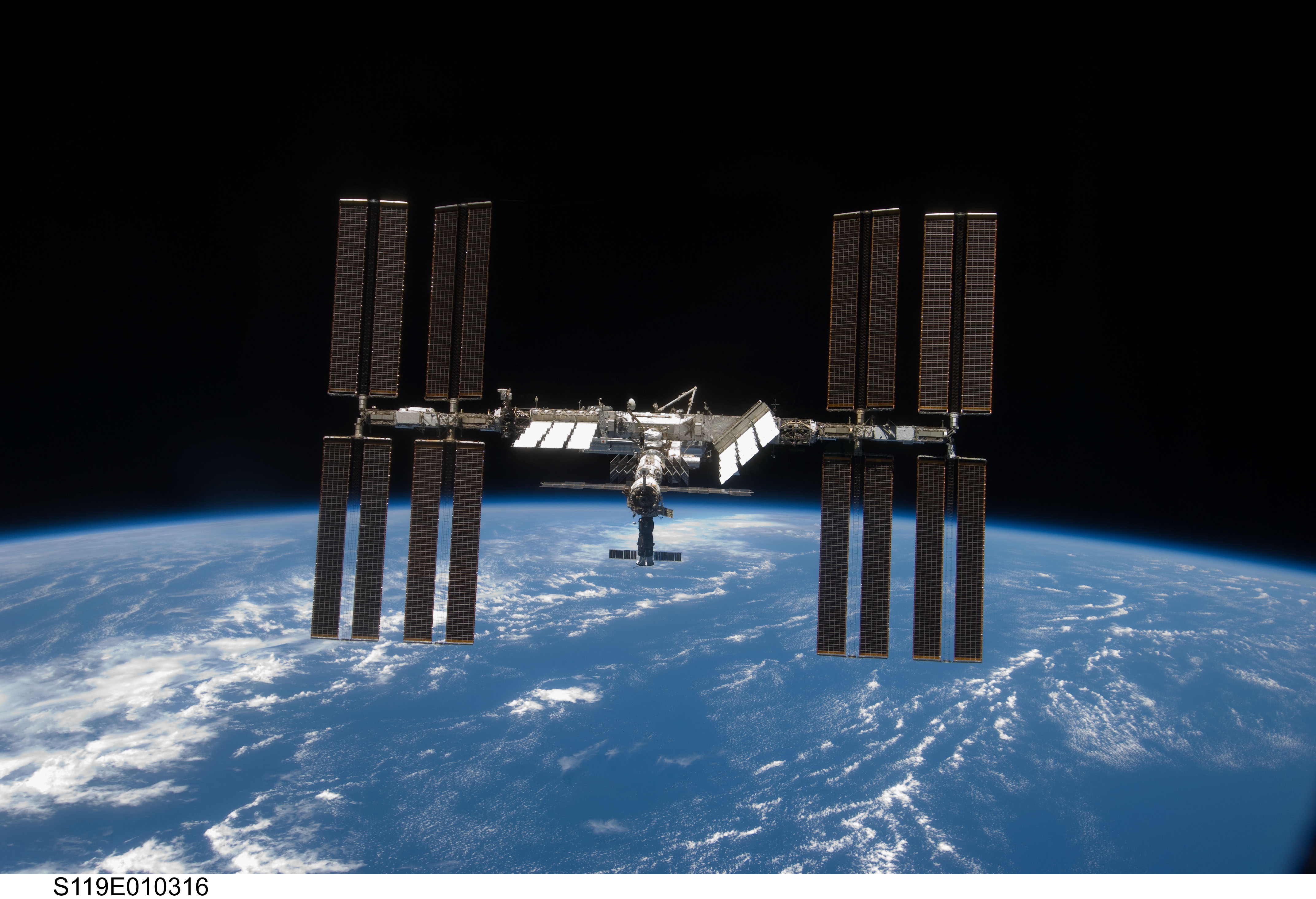
Looking up into the night sky, we can see many satellites gently gliding across the heavens on any clear night. Some are faint, others brighter. But nothing rivals the International Space Station when it makes a pass overhead. The largest artificial satellite in orbit around the Earth, the ISS circles the globe every 90 minutes and is usually visible for 1-2 weeks at at time in any given location. I recorded this podcast to provide some guidance on the how, why and where of the ISS.

"Seeing the ISS" on the Translunar Podcast. 

Image courtesy NASA. 

08 August 2013

KFOG Broadcast - August 8, 2013

Today's discussion with Greg Gory and the Morning Show team at KFOG includes the Perseids, the International Space Station, Star Parties and Saturn. Listen here. 

27 January 2013

Seeing the International Space Station

International Space Station
The International Space Station, or ISS, is a wonderful sight to see. It is Earth's 2nd largest satellite (after the Moon, of course). The ISS shines brightly because of the reflective surfaces across its trusses that shine brightly in the sunlight, and make the ISS look like a bright planet that moves relatively quickly across the sky.

The ISS only appears in the sky for a short while after sunset, or before sunrise. It is in orbit about 225 miles above the surface of the Earth; for example, shortly after a sunset the ISS catches sunlight and shines as it travels across the sky. When you get a very good alignment and it passes nearly overhead, it can reach the same magnitude as a bright Venus, and therefore be easy to spot. On such a pass, it takes about 5 minutes to travel from horizon to horizon, covering over 1000 miles in that time.

ISS visibility depends upon your location on Earth, since the best times to see the ISS in one part of the globe won't be the same as another. NASA has an an excellent web resource for this; for ISS sightings in San Francisco, we have morning passes right now, and will soon have good visibility in the evenings starting on February 5th. The iPhone app ISS Visibility is quite helpful for locating the ISS, with maps and easy-to-follow directions.

Best of luck seeing this wonderful sight. Image courtesy of NASA.

22 November 2010

Review of iPhone Astronomy Apps: ISS Visibility and Iridium Flares

Two of my favorite iPhone apps are ISS Visibility and Iridium Flares, apps that help you to locate satellites very precisely. I use these two apps extensively, anytime I have clear skies and want to enjoy the spectacle of dazzling satellites crossing the sky, even here in the bright city lights of San Francisco. Continuing from my previous post on iPhone apps, here are two more reviews.

ISS Visibility does exactly what it promises by telling you when and where to look to see the International Space Station. Transits of the ISS across the evening or morning sky are impressive, whether the viewing is of the space station crossing a broad arc across the sky, or a short appearance that ends in the impressive flickering and fade of the ISS as it crosses the Earth's shadowline from daylight to night. At a price of $1.99, ISS Visibility gives you simple-to-use charts based on your location, and shows you where to look along with a nice 2D map showing the location of the ISS over Earth as it passes your viewing site.

Iridium Flares are bright lights in the sky that shine when Iridium Satellites in orbit around Earth reflect sunlight back toward the planet and produce a particularly bright glint of light in the sky for a few seconds. I find iridium flares wonderful to watch because at their best they flare up to -7 or -8 magnitude, many times brighter than Venus or Jupiter at their brightest. Also, being able to predict these special events is quite a lot of fun. I love to show off iridium flares to friends when the conditions permit. The Iridium Flares iPhone App costs a mere $0.99 but will pay back many times over.

Enjoy these two apps to see things in the sky that will certainly impress you.

06 January 2010

International Space Station coming to a city near you!

The International Space Station (ISS) is one of the brightest satellites visible in the sky, and for the next few evenings it is making a particularly good set of passes over the USA and Canada in the evening. If you have not seen it fly over, it is worth a few minutes out of your day to use an online tool such as the Simple Satellite Tracker from spaceweather.com or the NASA Satellite Tracker.

Here in San Francisco we can look forward to four consecutive evenings of good fly overs. Wednesday 6th it is visible from 6:36 to 6:38 pm, Thursday 7th it is visible from 5:59 to 6:02 pm, and Friday 8th it is visible from 5:44 to 5:47 pm.

The ISS looks like a fast-moving airplane, but the light is perfectly smooth (not blinking, not red and white) and the path is a very clean arc from west to east. Given the current orientation of the ISS as it orbits Earth, the upcoming passes across North America will generally be from the west to east and from the south to north.

04 July 2009

International Space Station Marathon

When I host a star party or head outdoors in the evening, I like to check the status of satellites such as the Iridium communications satellites or the International Space Station (ISS). When they are visible, I like to point them out to friends. I marvel at these satellites in particular because they are (a) bright enough to see even with bright city lights, and (b) are well tracked and therefore predictable.

For the next few weeks the International Space Station will be particularly well positioned in its orbits around the Earth to be seen much more often than usual - even multiple times a day each week - throughout the month of July! I am looking forward to the graceful swing of the ISS across the sky, speeding at over 17,000 miles per hour overhead. NASA is calling this especially interesting period of time the Space Station Marathon and I think it will be great. Next week the Space Shuttle Endeavour will launch and link to the ISS to make the flyby even more interesting.

Here is the timetable for ISS visibility over San Francisco. If you don't live here, you can use the link on the right hand side of this blog to get to the general purpose ISS locator ("Space Station/Satellite Sighting").