Showing posts with label Annular Eclipse. Show all posts

22 May 2012

Report from Mt. Shasta: Ring of Fire Annular Eclipse

I led a Road Trip to Mt. Shasta for viewing of last Sunday's Ring of Fire Annular Eclipse. The event was well attended and we had a nice array of telescopes and a lot of very enthusiastic participants taking in this special event, each in their own way.

I observed the January 1992 annular eclipse from San Diego, CA, and had a very different experience, finding the eclipse at that time to be interesting but not inspiring. However, Sunday at Mt. Shasta, the Ring of Fire was very inspiring. I enjoyed the view through a number of telescopes, including some Hydrogen-Alpha, and the usual white light filters. I enjoyed the collective shout of excitement as the eclipse reached annularity. And I was pleased to simply have clear skies, with some light high cloud but nothing that disrupted the view of the magical display in the sky.

I'll be posting photos and links of pictures and videos from the event. If you were at Mt. Shasta, send me a link and I'll add it here: 


Video of the actual solar disk from Anju Saksena. Note the sounds of the crowd from 7:00 to 7:30.

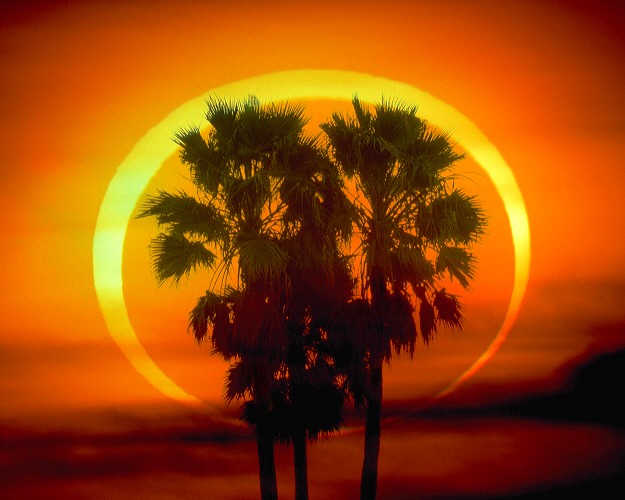
Annular Eclipse image (above) taken at Mt. Shasta Resort, courtesy John Belew.

16 May 2012

KALW Broadcast - May 16, 2012

Ben Trefny of KALW's Crosscurrents interviewed me about the Annular "Ring of Fire" Eclipse. It's a wide ranging discussion, with some fun mixed in as well. Listen here.

09 May 2012

KFOG Broadcast - May 9, 2012

I always enjoy visiting the Morning Show at KFOG to talk astronomy. Listen in to our fun discussion about the Super Full Moon, the Ring of Fire Eclipse, and Lunar Gravity! Click here to listen.

01 May 2012

Ring of Fire Eclipse 2012 in Northern California

It's May, and that means it is almost time for the Moon to cast its shadow on the Earth and create a wonderful spectacle in the afternoon sky. On Sunday May 20th, we will experience a very significant Solar Eclipse, a very rare and exciting "Ring of Fire," also known as an Annular Eclipse.

The afternoon of Sunday 20th, much of the western United States will see a very deep partial eclipse of the Sun. But in a special path across Northern California and several western states, we will witness the Moon fully enclosed within the disk of the Sun, creating a beautiful "Ring of Fire" effect. This effect will only last about 4 minutes, and will only be visible from the special path. Earth-Sky has an excellent overview article about the eclipse. If you choose to remain in San Francisco, you will see a very deep (90%) eclipse of the Sun, but if you travel a few hours north, you will experience the full Annular effect.

The map shows the path of the Moon's shadow across Northern California. I plan to watch this eclipse from the Mt. Shasta area, and there are many more areas to go to see this event. If you wish to join me and the San Francisco Amateur Astronomers (SFAA), check this article on the Ring of Fire Road Trip or my past blog post. But you have lots of choices, and depending upon the weather outlook, you will want to have some mobility to get to a good viewing spot in case of (gasp!) clouds. Here is a much more detailed map from Eclipse-Maps.com.

One of the most important factors when preparing to watch an eclipse is eye protection. I encourage all readers to purchase specialized viewing equipment such as eclipse glasses or a shade 14 welder's filter. At all times, the intense radiation from the Sun can cause permanent eye damage and even blindness, and during an eclipse it is tempting to stare up at the Sun. However, with simple planning and preparation, you can enjoy the eclipse without any fear of damaging your eyesight. Mr. Eclipse has some valuable information about eye safety and resources for buying solar glasses.

I wish all of you clear skies and a great view of this special event.

Map courtesy of Eclipse-Maps.com.

17 April 2012

Get Involved: Mt. Tam Lectures, Globe at Night

Part of the joy of astronomy is to gaze up in the heavens and enjoy the spectacle of looking into the vastness of space. And for many, another part of the joy of astronomy is learning about space science. I like to highlight opportunities in the San Francisco Bay Area for both of these perspectives, and one of my favorite places to both learn about space and also enjoy gazing into the heavens is on Mt. Tamalpais in Marin County, where the public is invited to take part in monthly lectures by leading astronomers, and immediately afterwards, enjoy the heavens through telescopes provided by our local astronomy club, the San Francisco Amateur Astronomers (SFAA). The 2012 season of lectures kicks off this Saturday April 21st with Dr. Alex Filippenko of UC Berkeley, talking about the upcoming Ring of Fire Solar Eclipse in May, and the Transit of Venus in June. I'll be there giving a night sky tour following Dr. Filippenko's lecture, and the weather is cooperating so a good evening is in store. More information here.

The annual dark sky awareness event called Globe At Night comes to a close this week. The public around the world is invited to find one of three bright constellations and estimate how many of the stars in the constellation are visible from your location. By submitting your results online, you contribute to a world-wide database of sighting, helping to build a global map of light pollution and to raise awareness of this issue.

No matter where you are, you can find astronomy events on the Night Sky Network. Check out this great resource and Get Involved today!

18 March 2012

Ring of Fire Roadtrip and the San Francisco Amateur Astronomers

In just two months, the western United States will witness a special astronomical event, a "Ring of Fire" solar eclipse, also called an Annular Solar Eclipse. This particular kind of eclipse is the result of an exact alignment of the Sun, Moon and Earth, but unlike a Total Solar Eclipse in which the sky turns to night and the Sun's corona becomes visible, an Annular Eclipse brings us a different spectacle in which the inner 90% of the Sun is blocked out by the Moon, leaving an eerie "Ring of Fire" in the sky.

The event takes place on Sunday May 20th and although San Francisco and many parts of the western US will see a very deep Partial Solar Eclipse, you will have to travel to Northern California to see the full 'Annular' effect in which the Moon is centered in the disk of the Sun. 

My local astronomy club, the San Francisco Amateur Astronomers, is sponsoring a "Ring of Fire Road Trip" for those who'd like to join the club and view the May 20th eclipse from the Mt. Shasta area, several hours north of San Francisco. If you'd like to learn more about this, check out the newly-redesigned SFAA website and make plans to see this special event. 

By the way, the SFAA conducts monthly lectures, star parties and special events like the Ring of Fire Roadtrip. Check out the website for the latest events, including a lecture this Wednesday March 21 by NASA Astronomer Jeffrey Van Cleve on the topic of Near Earth Objects. Most SFAA events are open to the public and we welcome you to join us for a talk, a road trip, or a night under the stars at one of our upcoming Star Parties in San Francisco or high atop the fog on Mt. Tam, about 45 minutes north of San Francisco.  

I hope to see you at an upcoming event. 

Image courtesy of Wikimedia Commons / Sancho Panza.

31 August 2011

Big Astronomy Events in 2011 and 2012

Much of the time, I enjoy astronomy as a day-to-day hobby, taking in the sky often and enjoying the slowly changing view of the heavens. Sometimes, however, big events come along and obligate the observer to be present at a specific moment in time -- and also have the good luck of clear skies. We have a three such events in the coming year, and the San Francisco Bay Area is a good base from which to see these events.


This Lunar Eclipse will peak on Saturday morning, December 10th, just before sunrise here in San Francisco, meaning that if the skies are clear, the best view will be at the coast, where the Full Moon will be entering Total Eclipse just as it is setting over the Pacific. This will be impressive!


An Annular Eclipse, also called a "Ring of Fire" eclipse, happens when the Moon's disk fits "inside" the disk of the Sun, creating a ring of sunlight in the sky. It's not the same as a Total Solar Eclipse, but still a beautiful natural phenomena, one worth a trip to Northern California to see. The viewing path can be seen on the map in this link, and will pass near Redding and Mt. Shasta in Northern California. I'll be organizing a road trip with the San Francisco Amateur Astronomers (SFAA) to see this spectacle.


A transit of a planet in front of the Sun is a rare and unusual event. This is one of a pair of transits of Venus, the first of which occurred in 2004, paired with this one in 2012. Then we have a 100-year gap until the next pair of transits of Venus. It will be a daytime event, of course, because we are going to see the tiny disk of Venus cross directly over the Sun's disk.

- - - - - - - - - - - -

I'll write about each of these events as the time draws nearer, so for now the main thing is to mark your calendar and do a bit of background reading by following the links in this blog post.

Image courtesy of NASA.

03 February 2010

Annular Solar Eclipse of 2010

Eclipses are very exciting events, special moments that provide beautiful visual spectacles in the sky. Every year there are typically two to three eclipses of the Sun ("solar eclipses") and two to three eclipses of the Moon ("lunar eclipses"). And for each eclipse the event can be "total" (where the Sun or Moon is fully blocked out), or "partial" where a portion of the Sun or Moon is blocked out, but a portion is still visible.

Last month there was one such event, a type of solar eclipse called an Annular Eclipse. In this configuration, the Moon's disk appears to block out most the Sun but does not completely block it out. What makes the Annular Eclipse very special, however, is that the disk of the Moon is fully encircled by the Sun. The eclipse in January was not visible here in San Francisco but was seen in the eastern hemisphere. A fellow astronomy blogger and resident of Sri Lanka, Desh, put together an eclipse page that has video footage of the event and lots of great photographs. He organized a major eclipse viewing event for Sri Lanka.

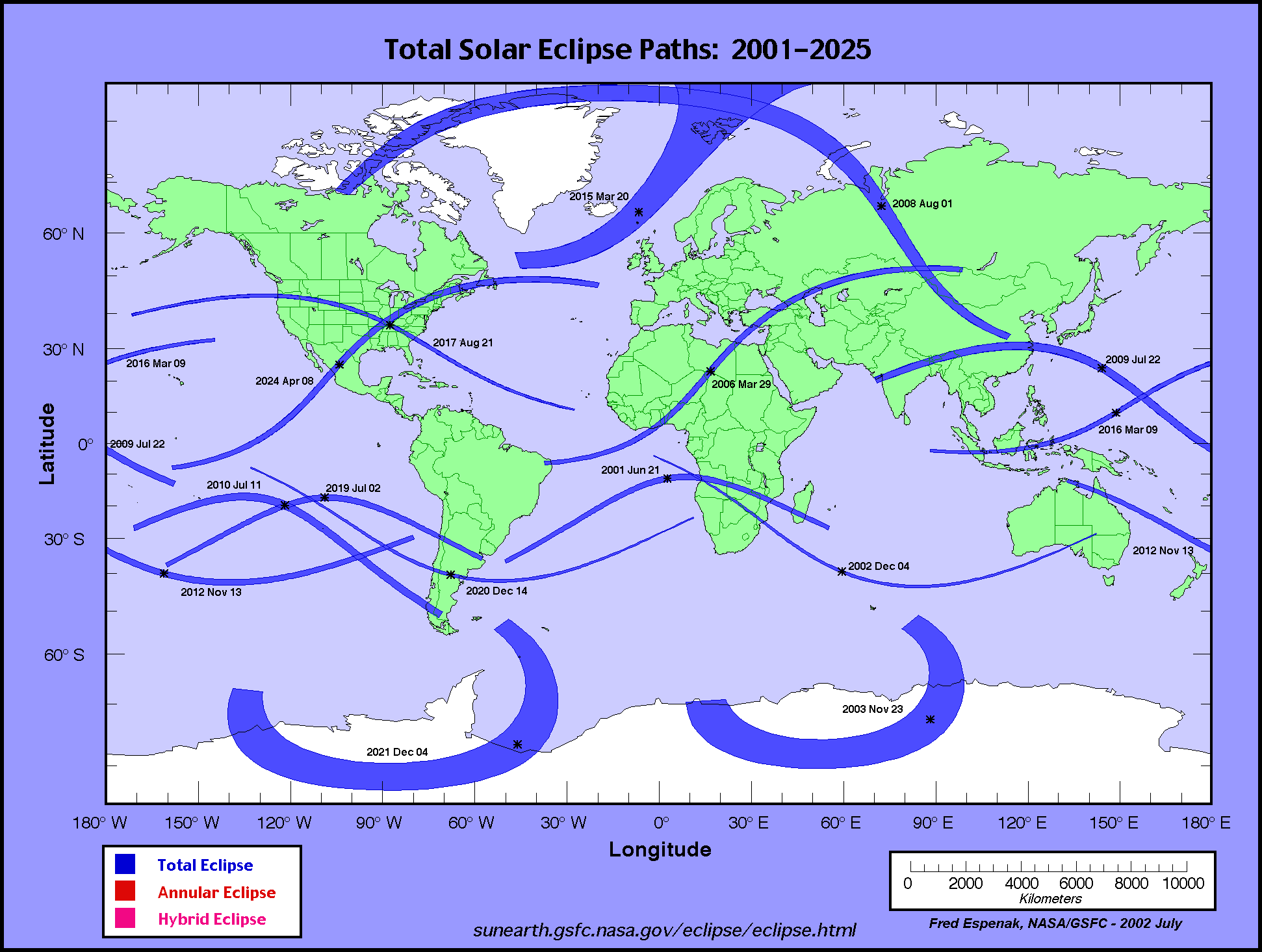
Throughout 2010 there are more eclipses. The biggest event of the year is the Total Solar Eclipse that happens this July 11th, but again will not be visible here in San Francisco. To see this one you will need to travel to the South Pacific. The NASA Eclipse web site is full of details on this and every eclipse and for those of you who want to travel to see a Total Solar Eclipse someday, consult the NASA Total Solar Eclipse Paths map on their website. I think of it as a long-range travel planner!

For those of us in the Bay Area (and the entire Western Hemisphere), mark your calendars for December 21st when we get a beautiful Total Lunar Eclipse on the solstice to welcome in the winter.

Note: for a nice audio description of an eclipse, listen to my recent interview on KALW (just after the stargazing part of the interview).