07 June 2026

The June 2026 Conjunction of Jupiter and Venus

We have a wonderful opportunity to watch a grand spectacle of nature, a close encounter of two of the brightest objects in the night sky. A rare conjunction of Jupiter and Venus which will reach its peak on Tuesday June 9th. These two objects are so bright, they will be easy to spot in the western sky after sunset and will put on a show for many days. They will start with a very close encounter on June 9th and continue for the next week with the planet Mercury and additional close encounters with the Moon on June 16th and 17th. 
Conjunction of Jupiter and Venus 

My detailed explanation of this conjunction can be found on my latest Translunar Podcast episode from the Volkssternwarte München, detailing what to look for today and for the next week. 

This article from Sky and Telescope Magazine provides much details where to look and what to expect.

Image courtesy of Sky & Telescope. 

13 May 2026

The Big Dipper

Ursa Major and The Big Dipper
We all love the Big Dipper, don't we? It's a constellation that nearly everyone can identify. And it is a helpful aid to find other things in the night sky. 

I recorded a podcast for the Translunar series that covers this topic. You can find it here. Give it a listen and enjoy the lovely Big Dipper, high in the night sky right now. 

This article from the Adler Planetarium is quite helpful as well. 

Image courtesy of the Adler Planetarium. 

17 March 2026

Moon Watching: It's just a Phase

Lunar X and V
The Moon is a wonderful object to behold. It brings us ever-changing patterns as it orbits our home planet every 29 days. Each seven days, we reach a new phase and a new and different way to see the Moon. Just after new Moon, it's a fun challenge to find a young Moon. At the first quarter, there is a special window of time to see the Lunar X and V. At full Moon, libration reveals edges that we don't normally see, and special views on the surface. And at last quarter, we can see the Moon guiding our way around the Sun. 

On the March edition of the Translunar podcast, I talk in depth about these four unique ways to see the Moon. Each of these visual experiences are quite challenging yet bring new perspectives on our good friend, the Moon. Enjoy! 

17 February 2026

It's Good to be King: Mighty Jupiter

Track of Jupiter
The planets create lovely patterns across the night sky and this February there is a good alignment of planets in the evening sky. Some are close to the horizon and challenging to find, but one reigns from high above us and outshines everything else in the night sky: the mighty Jupiter. 

The chart on the right shows the track of Jupiter in 2026 as it moves through its retrograde path at present, moving back to prograde motion toward the west later this year. 

In my latest podcast on the Translunar podcast series, I talk about how to find the planets and what to look for now and in the coming months. Enjoy! 

19 January 2026

Your New Telescope 101: Peering Deep into the Night Sky

A big telescope reveals the beauty and majesty of the universe. It's truly astonishing what you can see when the conditions are just right and you have a powerful telescope at your fingertips. But which telescope is the best for doing this, or if you live in a city, what's the right choice for a telescope? 

I recorded a podcast for the Translunar series from the Munich Public Observatory to explore this subject in more detail. Most people love seeing the night sky and getting a close-up view of impressive galaxies, nebulae and star clusters. Doing this is a challenge, however, because telescopes are scientific instruments and take time and experience to make them work as you wish. 

Have a listen to the podcast before you buy a telescope for yourself. I am sure you will have a few new ideas to consider when you make your purchase. 

Image courtesy of Unsplash.

11 December 2025

A Close-up Look at the Southern Skies

The Southern Sky
For us 'northerners' who live north of the equator, traveling south of the equator means that you see the heavens from a very different point of view. I spent four nights under those skies two months ago and found it very challenging to adapt to the view of the skies. Familiar constellations and celestial dynamics were turned upside-down, and entirely new constellations and celestial objects came into view. 

Navigating this new world was very inspirational and opened my mind to new ways of seeing the sky above me. I created a podcast to share my thoughts and ideas, the latest episode in the Translunar series from the Munich Public Observatory. You can also find the Translunar podcast on any podcast player. 

Image courtesy of SkySafari. 

04 November 2025

The Darkest Skies on Earth

Southern Sky & Milky Way
For many years, my astronomy dream has been to spend time in a dark location with excellent viewing and reliable weather, a location close to a comfortable room to sleep in and yet fully dark and respectful of the needs of astronomers. And finally, somewhere with a very wide and expansive viewing with few or no trees to block the view and with a safe spot to spend a night under the stars without risk of wild animals. 

After thinking about this for years and talking with many fellow amateur astronomers, I followed the lead of a fantastic astrophotographer and went to Namibia, and in particular to a lodge in the middle of the desert called Rooisand. It encompasses all of the above-mentioned traits. I only spent part of a week there but it was extraordinary. 

In this episode of the Translunar Podcast I talk at length about my experience there. Give it a listen if you want to get the full picture. 

I am not an astrophotographer but the image is of the southern sky featuring the southern cross (on its side near the bottom of the image) and the Milky Way glowing in the background. I took this with my mobile phone. It just starts to capture the dazzling sky that is there every night. 

Note: I am not affiliated with Rooisand nor receive any compensation for this post. I just love their location and lodge :-) 

02 October 2025

Eyes on the Infinite: The Vera C. Rubin Observatory

About | Rubin Observatory
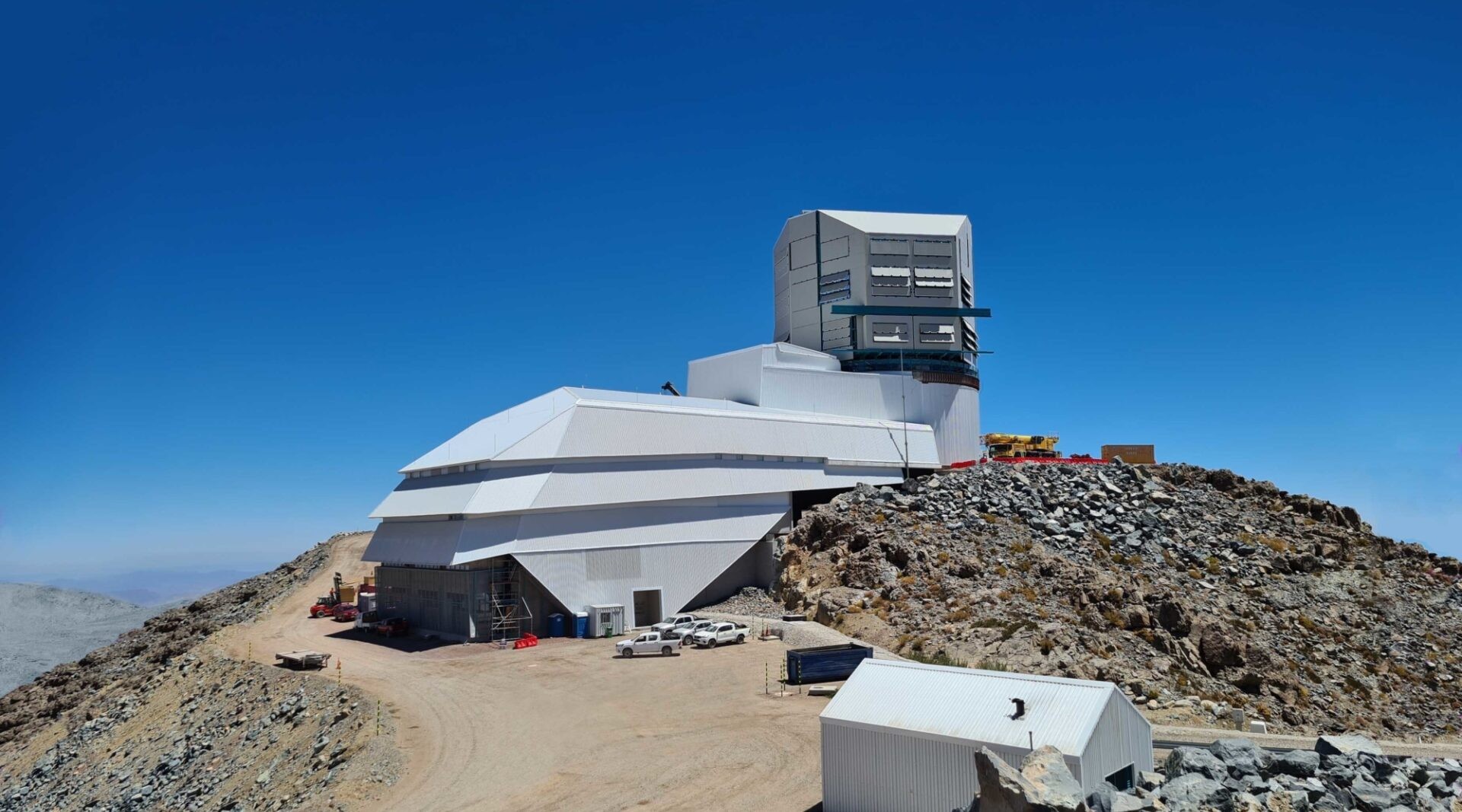
Earlier this year, the Vera C. Rubin Observatory came online and has been delivering amazing astronomy. The observatory incorporates the largest digital camera ever built, and is conducting the most comprehensive sky survey ever. 

The observatory, in the Atacama desert of Chile, is superlative in every sense. I recorded a podcast about Vera C. Rubin Observatory for the Translunar Podcast series and describe in detail what makes this place so extraordinary. 

You can visit the website here and view the first images from the observatory. The depth and quality are stunning. I recommend you spend some time on the "First Look" images. 

Happy Viewing! 

19 August 2025

The Magic of the Milky Way

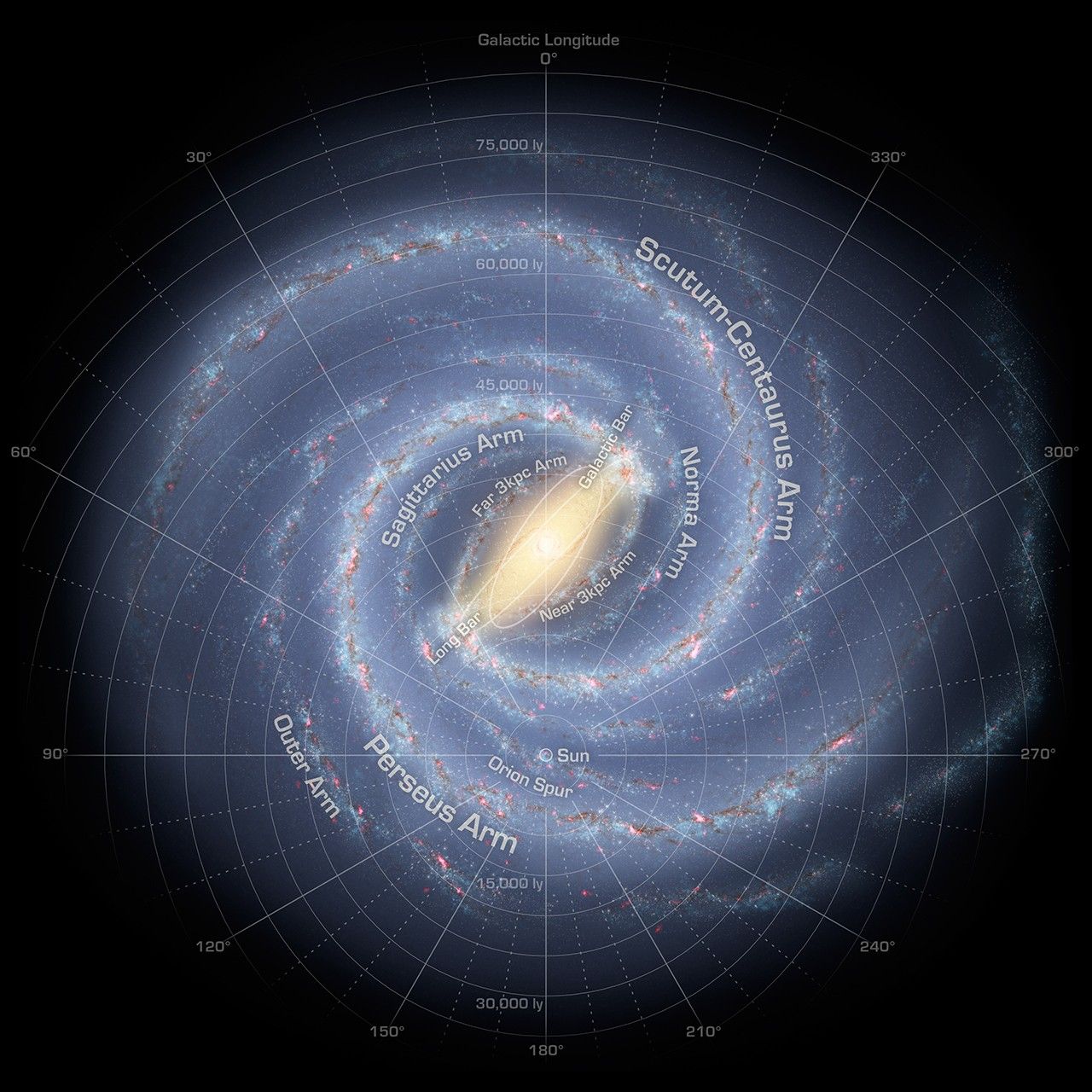
The Milky Way Galaxy
We live in an SBc galaxy, a Barred Spiral galaxy, according to the Hubble Sequence classification method. What does that mean? Well actually, it means we live in a very nice example of a galaxy in the Local Group of the Virgo Cluster in the Lanaikea Supercluster in the Universe. How's that for a mouthful? 

OK: we can make this simpler. The Milky Way is a lovely band of light that we can see in the night sky. And when we look up in the summertime, it's full of treasures to discover. We can see the spiral arms, the dark dust lanes, and the vast array of star clusters, nebulae, and more. 

In the August 2025 episode of the Translunar Podcast, I provide a tour of our own galaxy and a way to think about the band of light we see in the sky when we view the summer sky from a dark location. And I share some insights into how we categorize and classify galaxies. Savor the moment and happy listening (and viewing). 

Translunar Podcast, courtesy of the Volkssternwarte München, available anywhere you get your podcasts. 

Image courtesy of NASA

10 July 2025

The Midnight Sun

Above the Arctic Circle, days during the summer are very unusual. At some point in May or early June the sun does not set, but instead stays above the horizon continuously, and remains above the horizon for several weeks. At midnight during this season, you can see the sun shining brightly above the horizon. 

I had the good fortune to experience the Midnight Sun in June of 2025 and found the entire visual to be very special, in particular when I thought about the actual physics and astronomy behind the motion of the sun in summer in these very high latitude locations. 

In the July 2025 episode of the Translunar Podcast, I provide a description of this unique experience and share some insights into the physics and astronomy behind this special phenomenon. 

Translunar Podcast, courtesy of the Volkssternwarte München, available anywhere you get your podcasts. 

Image courtesy of the author. 

12 June 2025

The Most Distant Planetary Probes to leave Earth

Humans have pushed the frontiers of exploration in space by sending probes to the edge of our Solar System and beyond. Just how far have we traveled, and what have we seen along the way? How do we keep in touch with the most distant objects, and what is left to learn from these probes? 

In the June 2025 episode of the Translunar Podcast, I discuss the very old Pioneer and Voyager missions past Jupiter, Saturn, Uranus and Neptune, as well as the New Horizons mission past Pluto and into the Kuiper Belt.

Translunar Podcast, courtesy of the Volkssternwarte München, available anywhere you get your podcasts. 

Image courtesy of NASA

18 May 2025

All the Colors of the Stars

Jewel Box Cluster
When you go out at night and look up into the night sky, you might not immediately think to yourself "how colorful the sky is tonight ..." but indeed there are many dazzling colors in the fabric of the night sky, and you sometimes have to work a bit harder to see it. In this podcast for the Translunar Series, I talk about what you can see with the naked eye and through binoculars. And yes, there is much color in the sky if you take the time to look for it. 

The Translunar podcast series can be heard on most podcast players including iPhone and Spotify. If you speak German, Astrophysicist Jana Steuer also contributes riveting episodes on many deep cosmological and astronomical topics. 

Image courtesy ESO. 

23 February 2025

Watching Planets Move: focus on Mars and Jupiter

Jupiter, Mars and Moon on 6 March
I love watching planets move. So did the ancient Greeks and they named these wandering objects 'planetes' and to this day, the name stuck. The planets normally move in a graceful arc across our night sky, slipping from one Zodiac constellation to the next, bringing a change in composition to the tapestry of the night sky, modifying the normal patterns of the constellations. And showing us just how extraordinary our Solar System really is, a collection of planets orbiting a star alongside us on Earth, and creating a window into the universe of how systems emerge around our galaxy and the universe. 

Right now, Mars and Jupiter are extremely well placed in the night sky. They both are occupying the 'Winter Hexagon' which is a rich span of winter sky that includes many of the brightest stars in the night sky. At the moment, Mars and Jupiter are nicely bookending the circle of stars in the hexagon, Mars on the east side of the circle and Jupiter on the west side. Both planets are moving gradually eastward and the pattern we see now will change over the coming weeks. In particular, Mars will form very interesting patterns with the twin starts of Gemini, something you can watch and enjoy from night to night. 

My latest podcast for the Volkssternwarte München in the Translunar series features this alignment and part of the night sky. Give it a listen on a night when you have clear skies and you will make discoveries on your own. 

Image courtesy of SkySafari. 

24 January 2025

The Real Planetary Parade

I love to see planets in our night sky. They are wonderful. They are wanderers. In motion, always gently sweeping across the sky, often the brightest objects in the sky and certainly some of the most colorful and interesting, both to the naked eye and in a telescope. I've recorded a podcast for the Translunar series to share some ideas of what you can see right now and for the next few months, with a Mars challenge built in.

And for those of you looking for a big “Planetary Parade” on January 25th, well, I am sorry to say, January 25th will look a lot like January 24th, and 26th, and the 27th, and so on. It’s just hype and to be honest, I think it is just something someone created to drive clicks to their website. But don’t be disappointed: the reality behind the hype is that there really are lovely planets spread across the night sky and there are wonderful things to see and enjoy for the coming weeks and months. Have a listen to my podcast and you will get a clear and thoughtful explanation of the planets, what to see, and what to look for night after night. 


03 November 2024

Planetary Exploration

Viking Lander on Mars 1976
We humans have come a long way, evolving into a technologically advanced species. Over the past 60 years we have mastered the ability to send robotic spacecraft throughout the Solar System, getting a close up look at all of the worlds, even landing on some of them. As a young person in Los Angeles in the 1970s, I would regularly ride my bicycle to the Jet Propulsion Laboratory (JPL) and pick up the latest pictures from the Solar System, from the first landing on Mars in 1976, throughout the entire Voyager missions and fly-bys in the late 70s through the end of the 80s. I am personally moved to watch and learn as we (NASA, ESA, other space agencies) push the frontier and travel farther and wider in our own home solar system. 

I recently recorded a podcast for the Translunar series talking about Planetary Exploration. You can listen here. And for those of you in and around Munich, Germany, I will be delivering talks in English and in German at the Volkssternwarte München on the same topic in November 2024. 

NASA and the Planetary Society have amazing stories, reports and photos from these missions. If you like learning about our Solar System, you will be happy to find endless resources on their websites. 

Image courtesy of NASA. 


27 October 2024

Spooky Astronomy

The Face on Mars (1976)
It's that time of year when pumpkins begin appearing everywhere and darkness arrives earlier in the evening. We humans generally enjoy being spooked a bit, to be scared of things we do not fully understand or cannot fully explain. And looking up into the night sky, imaginations can run wild.  In 1976 the Viking landers took this iconic picture of the Martian landscape and many people saw a face in the picture. Since then, much better resolution images have come from Mars landers and orbiters and we now know that this is an optical illusion, a unique view that was fortuitous timing and also due to the fairly rudimentary camera that were on that early Mars mission. This is but one of many things people see in the sky, including UFOs and aliens, asteroids and comets, that strike fear into those seeing these objects. 

Several years ago I prepared a Halloween lecture called Spooky Astronomy that I have presented at the Munich Public Observatory (Volkssternwarte München). In this lecture, I share many more such examples of optical illusions, of real and less-real things we see in the sky, and talk about the science behind them. I have updated the talk and will present it again this week, in costume. It's fun, it's playful, it's a bit serious too, and bottom line, it's about learning. I have created a podcast version of this for the Observatory's podcast series, Translunar. You can hear it here

Image courtesy of NASA. 


22 September 2024

Space Weather

Between the Earth and the Sun are 93 Million Miles (150 Million Kilometers) of empty space. Or is it really empty? Actually, there is a lot going on in that vast expanse and we call that Space Weather. We live, astronomically speaking, quite close to a fairly ordinary star and thank goodness, because a 4 billion year old star that rarely changes its output has allowed life to emerge and thrive on Earth. But the Sun still has its moments and causes surprisingly regular phenomenon on Earth, much more than just warming the atmosphere.

I have recorded a podcast, in which I explain in detail what kind of space weather the Sun creates for us, and how you can learn more about these phenomena, including sunspots, northern lights, and solar flares. 

The website Spaceweather.com is an excellent resource for tracking the outbursts and phenomenon that are driven by the cycles and episodes of our own home star.

Image credit: SDO/HMI

07 August 2024

Perseid Meteor Shower 2024

The Perseids in 2024 promise a favorable viewing on the nights of August 11th and 12th. This meteor shower is quite reliable in providing a dazzling display of beautiful meteors, but you need to stay up late if you want the full effect. And you will want to find a dark location with little to no ambient light or city lights, if possible. Finally, you will want to dress well, because even on a warm day the evening can cool down quickly and make viewing unpleasant. 

Perseid Meteor Shower radiant

I have just published a podcast that outlines in detail the origin of the Perseids, the best way to view them, and other tips about this annual meteor shower. It is just a little over 20 minutes long and I think you will enjoy it. You can read more about the Perseids in this excellent article from Sky and Telescope. There are many online resources for more information, but you don't need to overcomplicate viewing of the meteor shower. The most important factors are a dark location, comfortable clothing, a place to sit or lie, a few good friends, and patience. You will see them, I can assure you. 

Give a listen to my Translunar Podcast here for more tips and inspiration. Wishing you clear skies and happy viewing. 

Image courtesy Sky & Telescope. 

10 July 2024

Tour the Summer Sky

You are invited to dress reasonably warm, go outside in the evening, and listen to this podcast on your earbuds or headphones. I will guide you on a tour of the night sky where you will discover many constellations, from scorpions to swans. Summer is not only the time of the summer triangle, it also has a very diverse collection of different constellations to offer and invites with its mild nighttime temperatures to stargaze until dawn!

"Tour the Summer Sky with Paul" from the Translunar Podcast series. 

Read more: this writeup from the Celestron Telescope Company is an excellent summary of what you can see in the summer night sky. 

Image courtesy of Panos Zoulakis / Wikimedia Commons

12 June 2024

The Marvels of Polaris, the North Star

Polaris, our North Star, is one of the most well-known stars in the night sky. But why is it so well known? What are its special characteristics that make it so special? It is far from being the brightest star in the night sky (it’s the 48th brightest), yet it has an amazing reputation. I've recorded a podcast to talk about the special place that Polaris inhabits right now, and how this will change over the very long-term. 

"Guiding Light: The Marvels of Polaris, the North Star" on the Translunar Podcast. 

Image courtesy of Wikimedia Commons